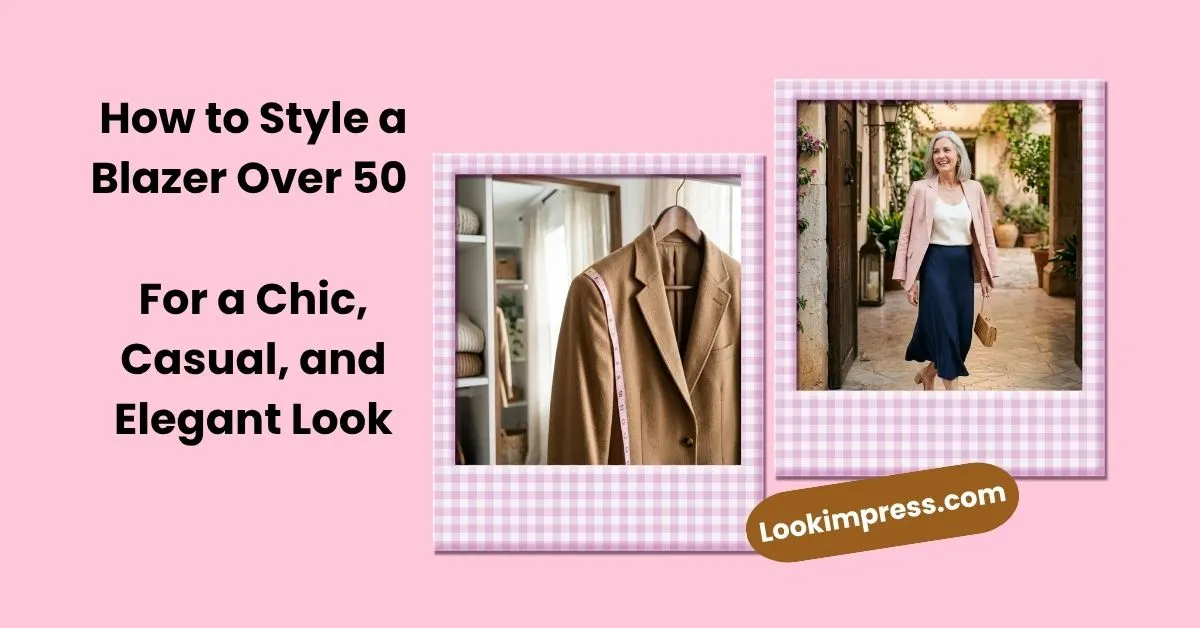
You take a blazer off the hanger, put it on, and feel like you are headed to a meeting you never agreed to. So it goes back in the closet. If you have been searching for how to style a blazer over 50, here is what I wish someone had told me: the blazer is rarely the problem. The fit is, and so are the pieces around it.
In this guide, you will check one blazer you already own for fit, then build a finished outfit around it. You pick the mood: casual, chic, or elegant. We start with fit because a blazer that fits needs very little else. Then we add a soft layer, the right bottoms, shoes, and one finishing touch.
What You Need
1. Check the Shoulder Seam and Hem Length First
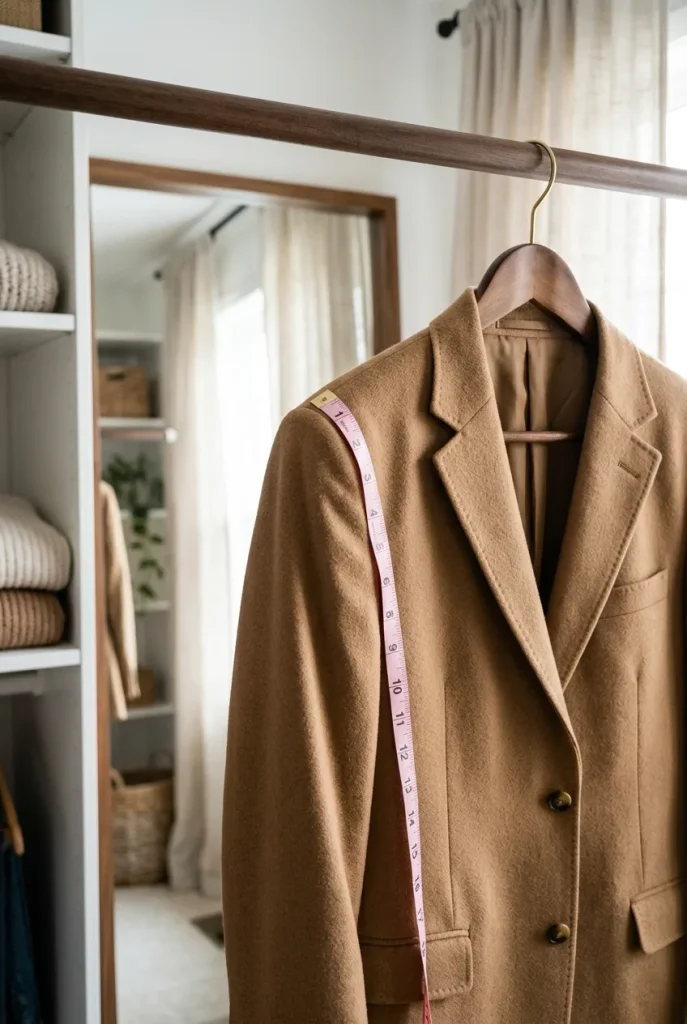
Most store-bought jackets pinch across the upper back because their pattern blocks are cut too narrow for a midlife posture. Slip your blazer on unbuttoned and stand 3 feet from a full-length mirror with a soft tape measure.
(If you do not own a tailor’s tape, hold a piece of string against the seam and measure it with a 12-inch kitchen ruler.) Check three exact points before building your outfit:
- Shoulder seam: Confirm the stitching sits within 0.5 inches of your outer shoulder bone.
- Hemline: Ensure the bottom edge stops 1 inch above or 2 inches below the widest part of your hip so the horizontal line does not widen your frame.
- Front opening: Verify the two front edges hang straight down without pulling diagonal creases across your bust.
Never keep a blazer hoping a tailor can fix tight or drooping shoulders. Shortening sleeves or nipping in side seams by 1 inch is affordable, but recutting a shoulder armhole ruins the hang of the entire jacket.
2. Test the Fabric Drape by a Bright Window

Natural daylight reveals harsh undertones and stiff linings that warm bedroom bulbs hide. Stand 2 feet from a window and hold the lapel near your chin to confirm the shade flatters your skin and silver or warm hair.
Squeeze a 4-inch section of the hem in your fist for 5 seconds, then let go. If the fabric feels like rigid cardboard or leaves deep wrinkles, switch to an unlined ponte knit or linen-blend jacket that moves when you reach forward.
3. Build a Smooth Base Layer Underneath
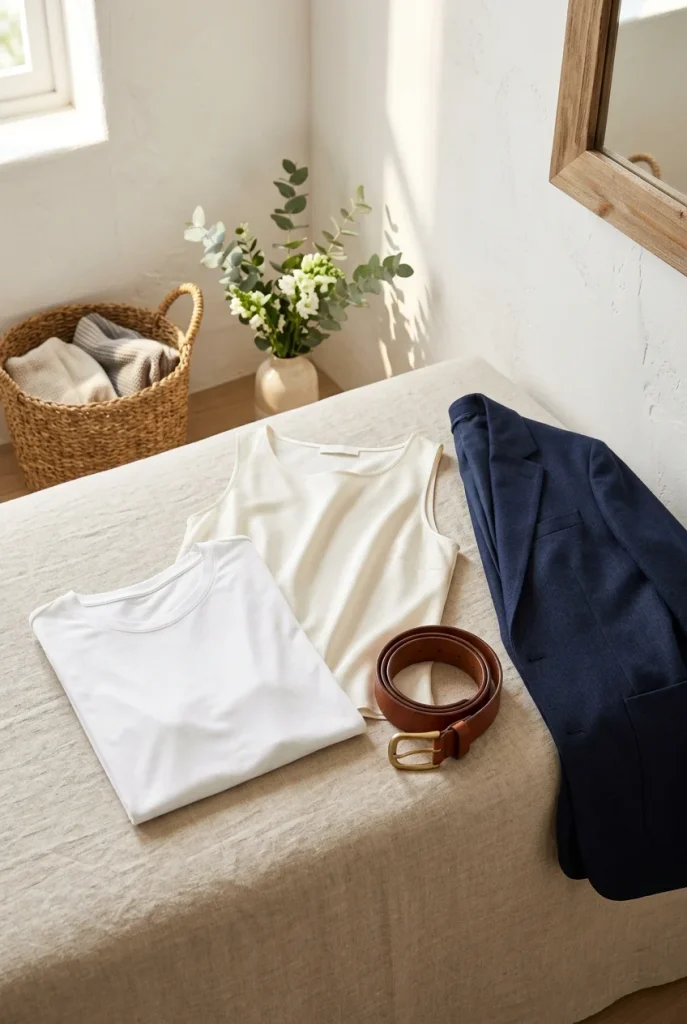
Bulky button-downs bunch up inside tailored armholes and add extra thickness around your middle. Put on a close-fitting modal crewneck tee, a fine-gauge knit top, or a silk shell that skims your ribs without clinging.
Tuck the center front of your top 2 inches wide into the front of your waistband, letting the sides fall softly over your hips. Showing that small strip of waistband under an open jacket lengthens your legs visually by 3 inches and stops the blazer from looking boxy.
Match the color of your base top to your pants—like a navy knit tee tucked into navy trousers—before adding a camel, ivory, or soft blush blazer on top. That uninterrupted vertical column of color trims your silhouette without tight shapewear.
Also Read>>> 9 Outdated Fashion Trends Women Over 50 Should Leave Behind in 2027
4. Balance the Jacket Cut With Relaxed Bottoms
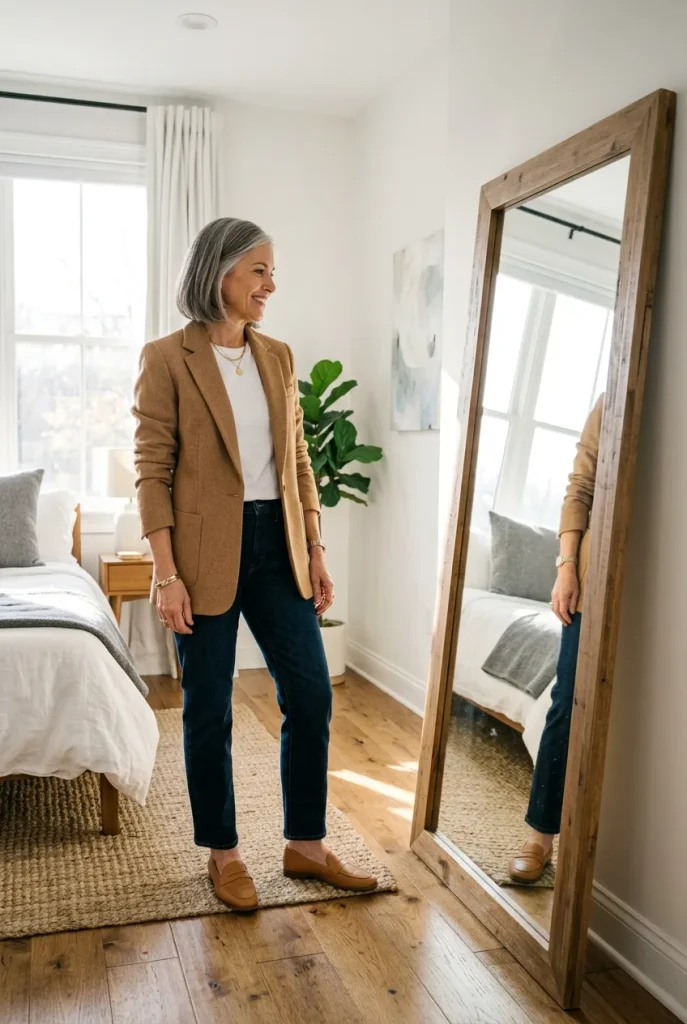
If your blazer is long or loose, pairing it with wide, baggy pants will swallow your frame. Step into dark straight-leg jeans with a 14-inch to 16-inch leg opening for a casual blazer look, or choose fluid ankle trousers that stop 1 inch above your shoe for a clean vertical line.
Skip skin-tight leggings under a structured jacket, which makes your upper body look top-heavy and dated.
5. Push Up the Sleeves to Show Your Wrists
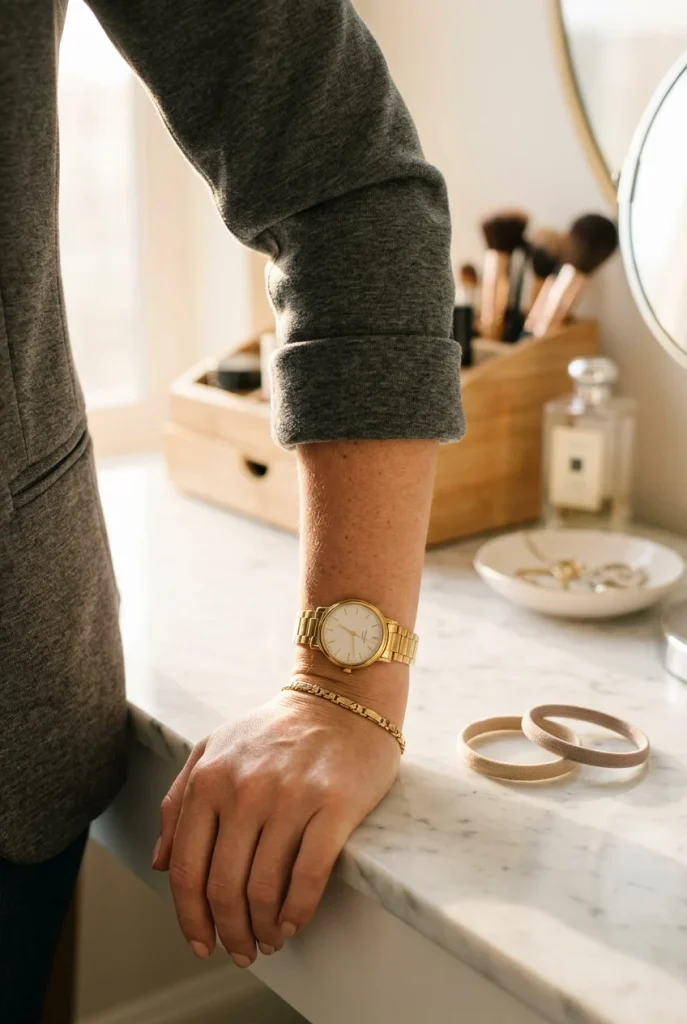
Three inches of bare forearm changes a heavy jacket from corporate to relaxed in seconds. Slide a thin, snag-free hair elastic over each sleeve and position it 4 inches below your elbow crease.
Pull the cuff up until the elastic hides inside the folded fabric, exposing your wrist bone and watch. (If your sleeves are unlined and slip down, fold the cuff back 2 turns by hand instead.) Showing the narrowest part of your arm draws the eye inward toward your waist.
When wearing a soft chambray or striped shirt under your blazer, fold the shirt cuff back over the jacket sleeve so 0.5 inches of pattern peeks out. That crisp contrast brightens your arms and holds the pushed-up sleeve in place without an elastic.
6. Ground the Outfit With Supportive Flat Shoes
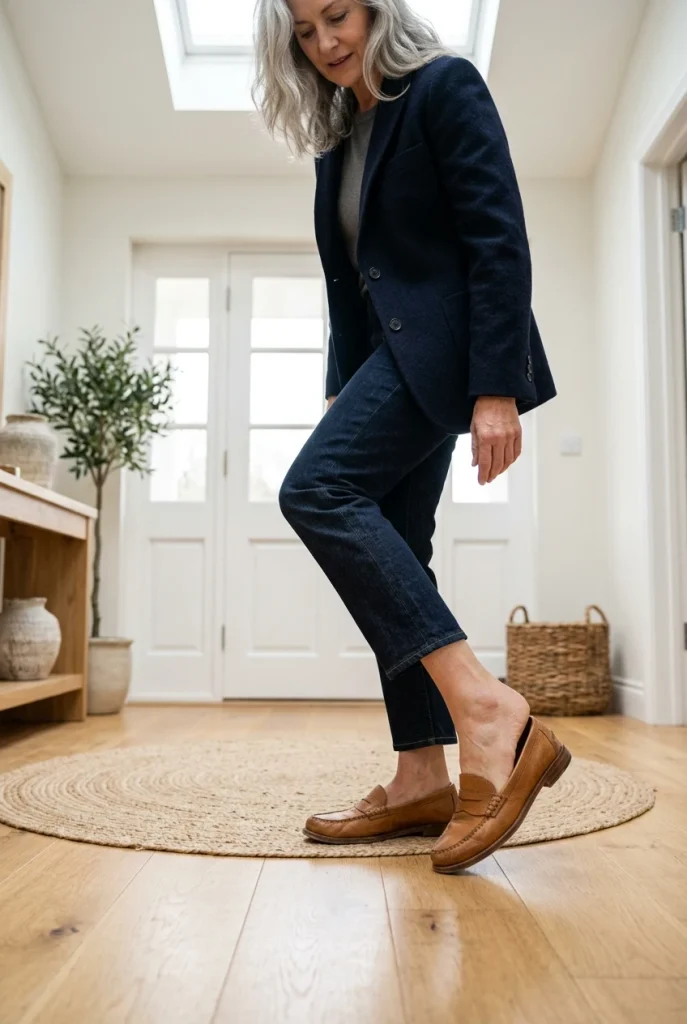
Our feet often widen by 0.5 sizes after 50 as the arches settle, and pinching heels ruin your posture. Slip on leather loafers, clean white sneakers, or 1.5-inch block-heel slingbacks that leave 0.5 inches of breathing room at the toe.
Flat or low-block shoes strip away the stiff office mood while keeping your stride comfortable all day.
7. Swap Two Pieces to Master How to Style a Blazer Over 50
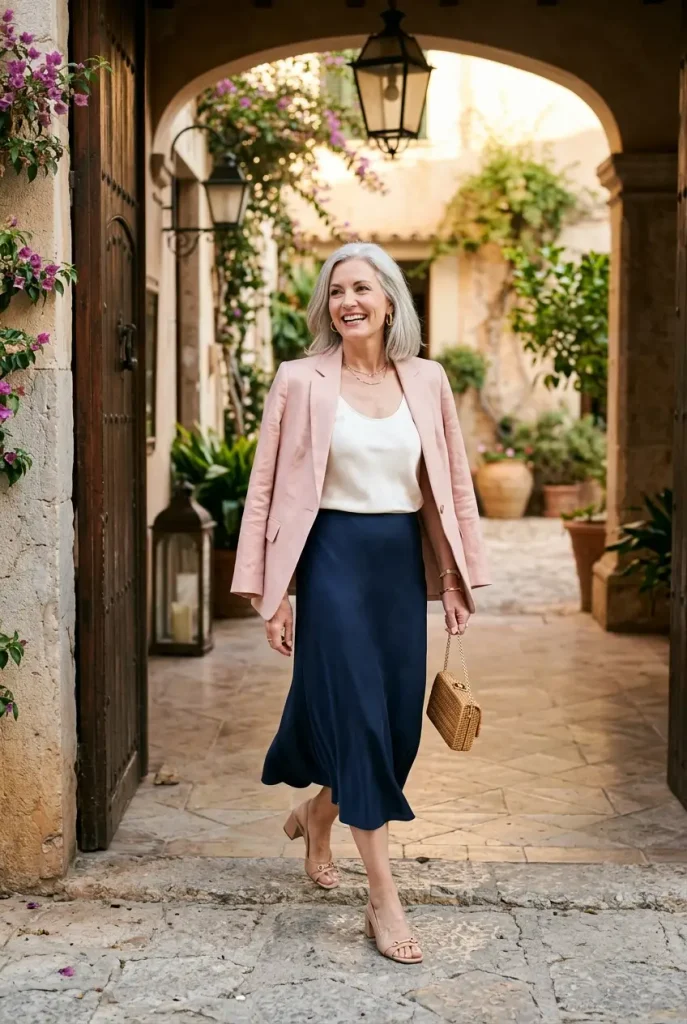
Sit in a hard chair for 30 seconds and reach both arms forward as if holding a steering wheel to confirm the back seam does not pull. Once your jacket passes that wear test, switch to two pieces to master how to style a blazer over 50 for any occasion:
- Casual look: Wear your open blazer over a white modal tee with straight-leg jeans and leather sneakers.
- Chic daytime: Swap sneakers for loafers and add a 1-inch leather belt.
- Elegant evening: Trade the tee for a silk shell, wear 1.5-inch slingbacks, and drape the blazer over your shoulders.
Before and After Expectations
- Jacket buttoned tight over a bulky collared shirt
- Full-length sleeves covering half your hand
- Hemline cutting across the widest part of the hip
- Paired with matching dress pants and pinching pumps
- Worn open over a smooth, front-tucked modal tee or shell
- Sleeves pushed up to reveal 3 inches of bare wrist
- Hemline hitting 1 inch above or 2 inches below the hip
- Balanced with straight-leg jeans and supportive loafers
Quick Reference Card: Over-50 Blazer Styling
- 1 blazer (wool, linen-blend, or ponte)
- Soft tape measure (or string + 12-inch ruler)
- Modal crewneck tee + silk shell
- Straight-leg jeans or fluid ankle trousers
- 2 thin hair elastics (for sleeve cuffs)
- Loafers, sneakers, or 1.5-inch slingbacks
- Check shoulder seam (within 0.5 inches) and hip hem.
- Test lapel color and 5-second fabric scrunch by window.
- Tuck a smooth base tee 2 inches wide at center front.
- Pair with 14-inch to 16-inch straight-leg bottoms.
- Push sleeves up to show 3 inches of bare wrist.
- Ground the look with flat loafers or 1.5-inch heels.
- Do the 30-second sit test and swap 2 pieces by occasion.
Conclusion
You now have a fitted, comfortable outfit that works with your current proportions instead of fighting them. Knowing how to style a blazer over 50 comes down to checking those 0.5-inch shoulder seams, keeping your under-layer smooth, and letting 3 inches of bare wrist show.
Next time you open your closet, try these same seven fit checks on a soft denim jacket or a structured knit cardigan. Save this guide to your favorite fashion board on Pinterest so you can pull up the checklist whenever you get dressed.
Frequently Asked Questions
What is the best blazer length for women over 50?
Look for a hem that stops either 1 inch above the widest part of your hip bone or 2 inches below it at mid-thigh. Stopping right on your widest hip measurement draws a horizontal line that widens your lower body.
How do I wear a blazer with jeans over 50 without looking dated?
Trade skin-tight jeggings for dark straight-leg jeans with a 14-inch to 16-inch leg opening. Layer a fitted modal crewneck tee underneath, push your sleeves up 3 inches, and finish with leather loafers or clean white sneakers.
Can petite women over 50 wear relaxed or boyfriend blazers?
Yes, as long as the shoulder seam sits within 0.5 inches of your natural shoulder bone. Keep your base top and trousers slim so the relaxed jacket skims your frame instead of swallowing it.
Which blazer fabrics wrinkle the least during a car ride or dinner?
Mid-weight ponte knit, wool crepe, and linen-rayon blends with 2% to 4% elastane hold their shape best. They let your arms move freely behind the wheel and smooth back out within 5 minutes of standing up.
Should I button my blazer or leave it open?
Leaving your blazer unbuttoned creates two long vertical lines down the front of your torso. Those open edges frame your waist and prevent tight pulling across the bust and midriff when you sit down.
1 thought on “How to Style a Blazer Over 50 for a Chic, Casual, and Elegant Look”