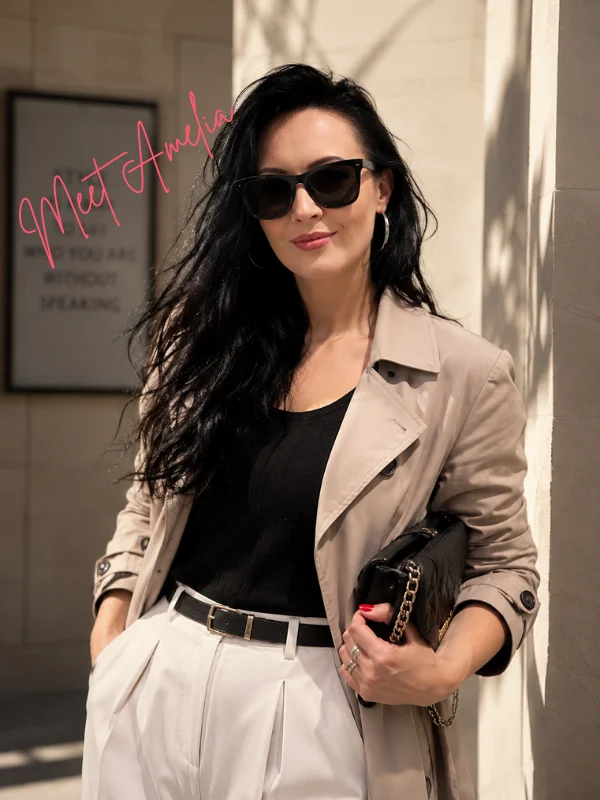
If you’re working out how to wear statement jewelry over 50, start with pieces you already own. A favorite accessory, your everyday clothes, and a mirror are enough to begin.
My starting point is one piece you want to wear today. It might be a curved silver cuff, a bright pendant, or a pair of broad gold earrings. Give that piece space in the outfit. A clear neckline lets a necklace show its shape.
Smaller earrings can sit quietly beside it. With bold earrings, leave some room around the face so they stand out.
By the end, you’ll have one complete outfit ready for lunch, dinner, or a day out. We’ll choose the piece, frame it with your clothes, and check how it sits while you move.
Total time
10–15 minutes
Active time
10–15 minutes
Difficulty
Beginner
What You Need
Gather these from your wardrobe before you start.
- Your statement piece: a necklace, a pair of earrings, a cuff, a ring, or a brooch.
- A complete outfit: a top and bottoms or a dress, plus shoes and any jacket you will wear.
- Everyday jewelry: any wedding rings, watch, or smaller pieces you want to wear with it.
- Your usual accessories: glasses, a bag, and any scarf or belt you plan to wear.
- A mirror: ideally one that shows the whole outfit. A phone camera set safely on a shelf can help if your mirror is small.
- A chair: for checking comfort while seated.
- Optional necklace extender: for changing the length of a chain with a suitable clasp.
At a Glance
- Choose One Statement Piece
- Select a Neckline That Frames It
- Put On Your Outfit
- Fasten Your Statement Piece
- Adjust the Placement
- Add Smaller Supporting Pieces
- Check Nearby Accessories
- Test the Fit
- Review the Whole Look
Choose One Statement Piece
A piece you already own is a good place to start. Pick the necklace, earrings, cuff, ring, or brooch you most want to wear today. Let that choice lead the outfit. Large beads, a bright stone, or a sculptural shape can each draw the eye. One pair of earrings counts as one statement piece. Leave the rest in the jewelry box for now.
Select a Neckline That Frames It
The top’s edge should leave the jewelry’s shape clear. Try these starting points: necklace: a plain crew neck or open shirt collar; earrings: a low or flat collar that stays clear of the earrings; cuff or ring: any neckline, with sleeves that show the piece; brooch: a firm jacket lapel.
A necklace can sit on bare skin or over fabric. Choose a top that keeps it from straddling the neckline, where it may slip under the edge. With a print, start with jewelry in one clear shape.
Put On Your Outfit
If you plan to wear a jacket, include it now so its collar and sleeves are part of the look. Dress in the top, bottoms, or dress, and shoes you’ve chosen. This gives you a clear view of the space around your neck, wrists, and hands. The full outfit also makes it easier to judge how much detail feels right to you.
Fasten Your Statement Piece
Work over a clear surface, where a dropped earring back is easier to find. Secure the closure that fits your piece: necklace: close the clasp through the end ring; post earrings: slide on the backs without pinching; brooch: lock the catch over the pin tip; bracelet: close its clasp, if fitted. Slip-on rings and open cuffs need no fastening.
Adjust the Placement
Above the neckline or fully over the fabric—both positions can work for a necklace. Move yours so its lowest edge clears the top’s edge. A brooch should sit flat on its lapel. A cuff should show beside the sleeve. Keep the full shape of your chosen piece in view.
Add Smaller Supporting Pieces
Your everyday rings or watch may already be enough. With a bold necklace, try small studs; with large earrings, try a slim bracelet. Keep nearby pieces quieter in size, shine, or color so your main piece stays clear. Gold and silver can share the same outfit. Repeating one metal in a smaller piece gives the mix a link. Choose the pairing that feels like you.
Check Nearby Accessories
With your usual glasses on, compare the details near your jewelry. Thick frames and bold earrings can work together; look for enough space to see both shapes. A scarf knot may hide a pendant, while a shiny bag chain can cross it. Move the scarf or bag strap away from the piece if needed. The aim is to keep your chosen jewelry visible as part of the outfit.
Test the Fit
1 minute gives you time for a first comfort check. Try these everyday moves: sit in your chair; turn your head; bend your wrists; lift your bag. Notice whether earrings catch your hair, a necklace pulls at the back of your neck, or a cuff digs into your hand.
Review the Whole Look
Daylight makes the final check clearer. Stand about 3 feet (90 cm) from your mirror near a window, with your bag in place. Look at the whole outfit, from earrings to shoes. Your chosen piece should catch your eye at a glance. If the look feels crowded, remove one smaller accessory and look again.
Fix a Styling Snag
| If This Happens | Try This |
|---|---|
| The necklace slips under the neckline. | Shorten it with its own adjustment links so it rests above the edge. For a lower position, use a compatible extender so the design sits fully over the fabric. |
| The earrings disappear into your hair. | Tuck your hair behind your ears to reveal the shape. If you prefer your hair loose, try a wider earring that shows from the front. |
| The earrings feel heavy. | Switch to a lighter pair. A broad shape, bright color, or textured surface can make a statement with less weight. |
| The cuff catches your sleeve. | Roll back the sleeve if it sits comfortably. A bracelet with a smooth edge is another option if the fabric still catches. |
| The brooch makes the fabric droop. | Move it to a firmer jacket lapel. If the fabric still sags, choose a lighter brooch for that garment. |
Statement Jewelry FAQs
Can I wear statement jewelry with jeans?
Yes. Try straight-leg jeans, a plain shirt, loafers, and a bold cuff. The denim keeps the outfit relaxed while the cuff adds a clear focal point.
Can I mix gold and silver?
Yes. A two-tone watch or ring can link gold and silver pieces you already own. You can also repeat a finish—such as polished metal—to give the mix a shared detail.
Can I wear bold earrings with glasses?
Yes. Wear your usual frames while choosing earrings so you can judge the pair together. If the area feels crowded, try earrings with one clear shape and a plain top.
How do I style an inherited piece?
Pair it with clothes you wear today: a vintage brooch on a plain blazer, or a bold pendant over a cotton shirt. You can wear one piece from a set and save the others for another outfit.
Can I wear a bold necklace and earrings together?
Yes. Give the pieces a shared metal, color, or shape, then keep the neckline free of extra detail. Starting with one main piece helps you judge the balance before trying a bolder pair.
Statement Jewelry for Women Over 50
Quick Reference Card
Allow 10–15 minutes · Beginner
What You Need
- One statement piece
- Full outfit, shoes, and any jacket
- Everyday jewelry and smaller supporting pieces
- Usual glasses, bag, scarf, and belt
- Mirror or phone camera
- Chair
- Compatible necklace extender (optional)
Steps
- Choose one statement piece you want to wear.
- Select a neckline that keeps the piece visible.
- Put on your complete outfit, including shoes.
- Secure the jewelry’s clasp, back, or catch.
- Adjust the piece clear of collars and sleeves.
- Add smaller supporting jewelry if wanted.
- Check nearby glasses, scarf, belt, and bag.
- Test the fit with 1 minute of movement.
- Review the whole outfit in daylight.