The bag looks lovely on the shelf. At home, your glasses case barely fits, the strap slips off your coat, or you spend too long hunting for your keys. This guide shows you how to choose the right handbag when you are over 50, starting with what you carry and how you spend your day.
My priority is a bag you enjoy wearing and can use without fuss. That might be a soft shoulder bag, a neat crossbody, or a roomy tote. Color is personal, too. A red bag deserves a place on your shortlist if it works with the clothes you love.
The method here gives each choice a practical check. You will compare the empty weight, try your own belongings inside, and check the fit over clothes you normally wear. By the end, you will have a clear choice based on your needs and budget. You may even find that a bag you own already does the job.
1# Set Your Spending Limit
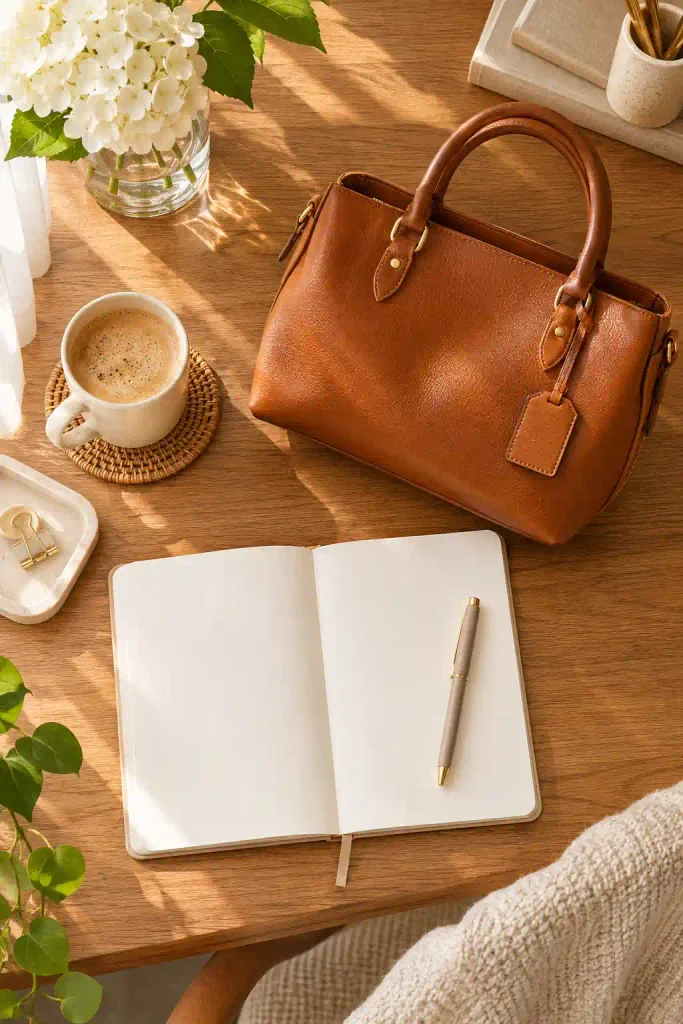
If $120 is your comfortable total, the bag, tax, shipping, and any extra strap must fit within that amount. Write your limit in your phone notes or on paper.
A discount still costs money; leave a bag outside your range on the shelf. You can judge its quality later without raising the budget to make it fit.
2# Lay Out Your Daily Essentials
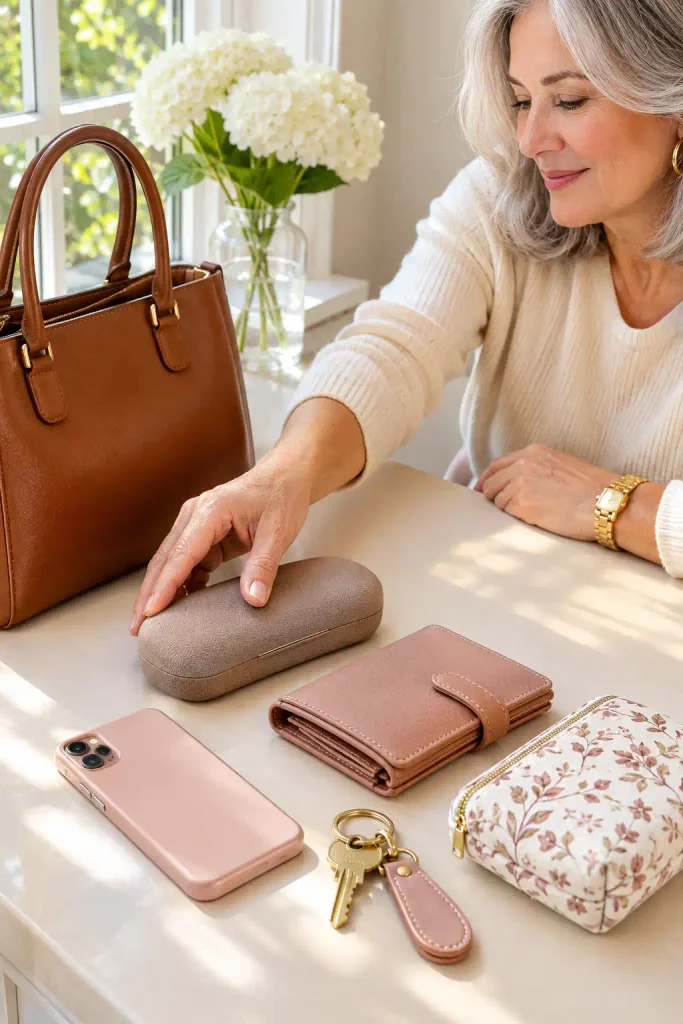
Your glasses case and phone tell you more about size than a label such as “small” or “medium.” On a clear table, lay out what you use on a normal day: phone; wallet; keys; glasses case; daily pouch. Include other items you need, such as medication or a compact umbrella. Leave old receipts and duplicates out of this group.
Keep each item in its usual case. A bulky glasses case still takes up room, even when you are wearing your glasses.
3# Choose a Style for Your Routine
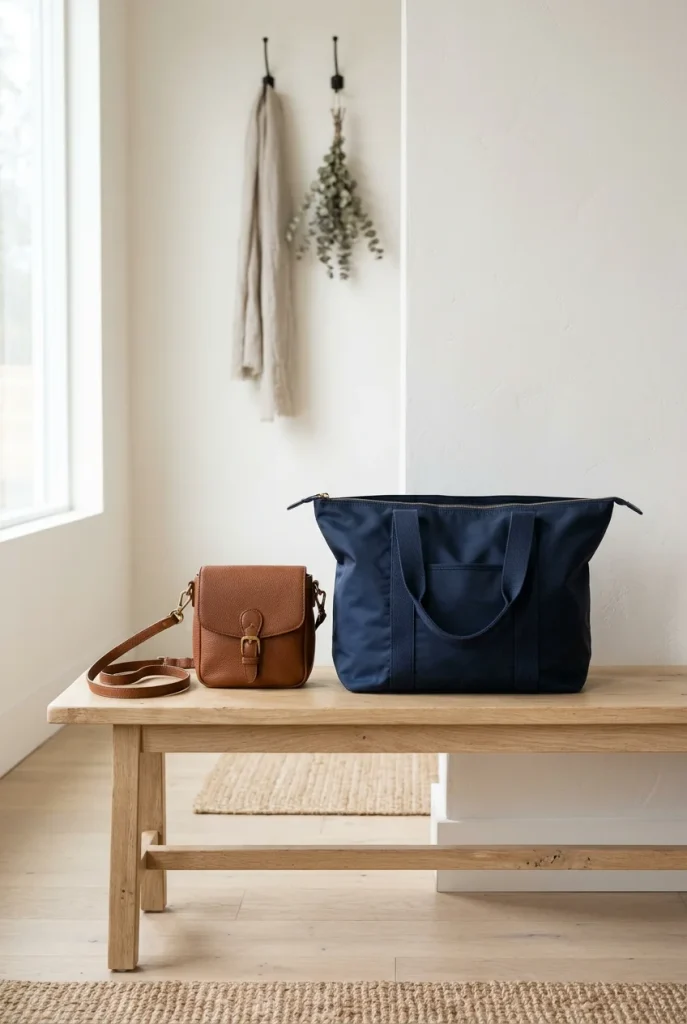
For errands or walks, a crossbody bag lets you keep both hands free. A shoulder bag may suit you if you dislike a strap across your chest.
A roomy tote suits a larger daily load. A satchel offers a more structured shape, though its handles may occupy one hand without an extra strap. Choose the style that fits your most common day. You will test its comfort before making a final choice.
4# Pick a Material You Can Maintain
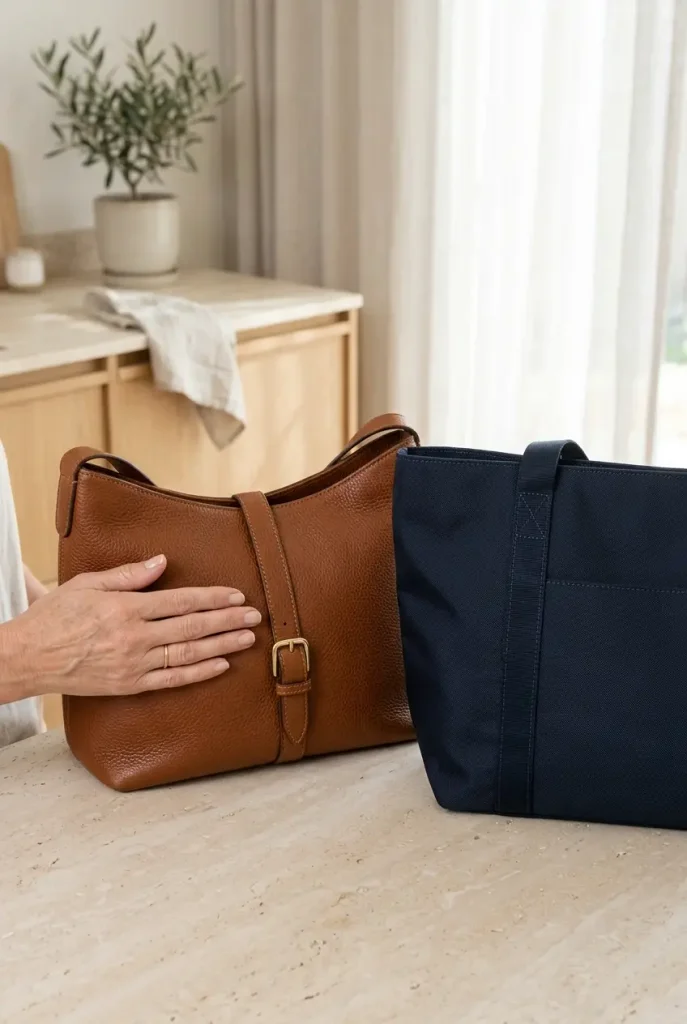
I’d put care needs beside color and shape on the shortlist. Nylon is worth considering for a casual bag with little upkeep. For coated canvas or faux leather, look for clear cleaning instructions, including any separate care for the trim.
Leather handbags vary by finish. Smooth leather, pebbled leather, and suede do not all need the same treatment. Suede needs protection from water, which matters if you often walk in wet weather. Choose a material whose care fits your routine, using the brand’s instructions as your guide.
5# Compare Empty Bag Weights
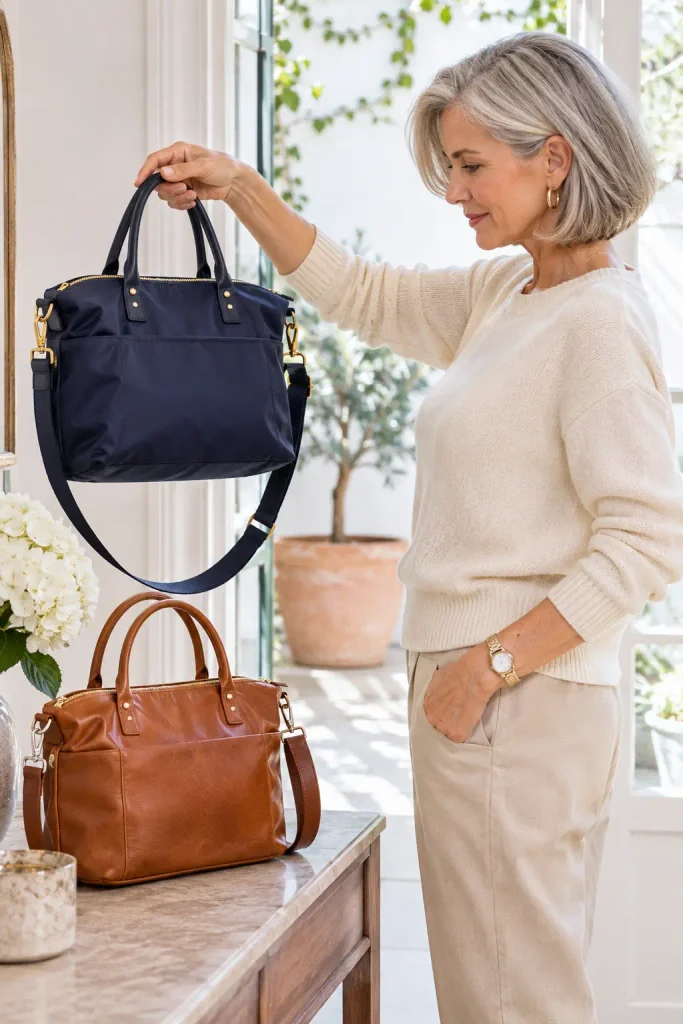
1 extra pound in the empty bag stays with you all day. Compare each bag with its intended strap attached and any loose packing removed. Use a kitchen or luggage scale, or lift each bag in turn with the same hand. Give lighter options priority when the size and features are equally useful.
6# Inspect the Bag’s Construction
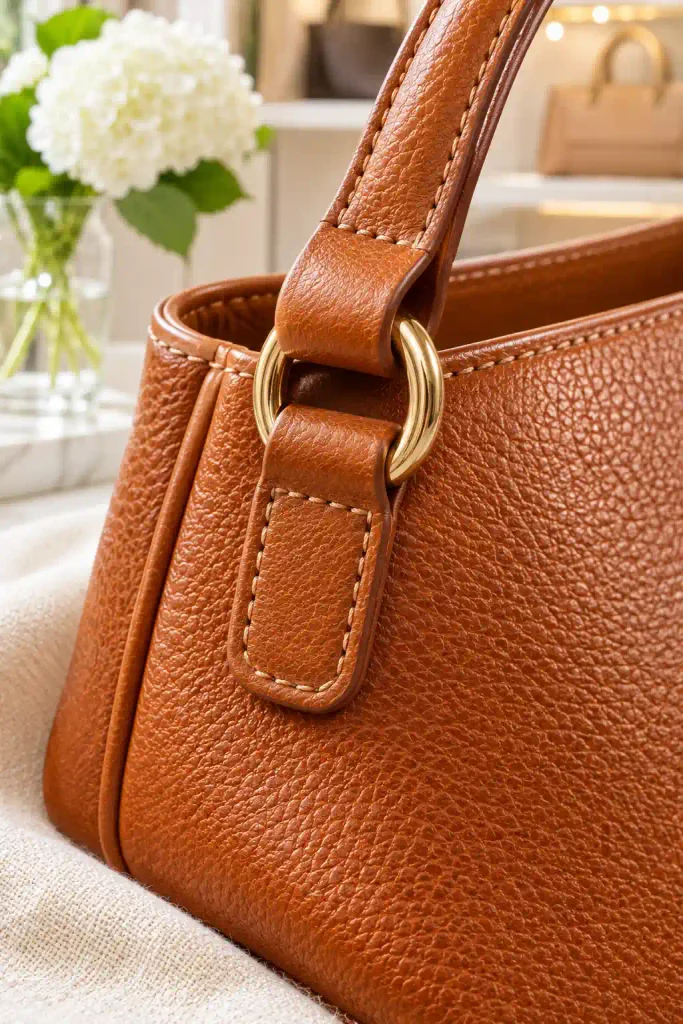
Small faults are easiest to spot before a bag is filled. Inspect four areas: stitching; strap attachments; lining, if present; metal fittings. Look for broken stitches, split edges, torn lining seams, or sharp hardware.
Pay close attention to where each strap joins the bag, since those points carry its load. I’d set aside a bag with visible damage before testing the fit.
Latest Post>> 14 Helen Mirren Inspired Outfits That Prove Style Has No Age Limit
7# Pack Your Daily Essentials
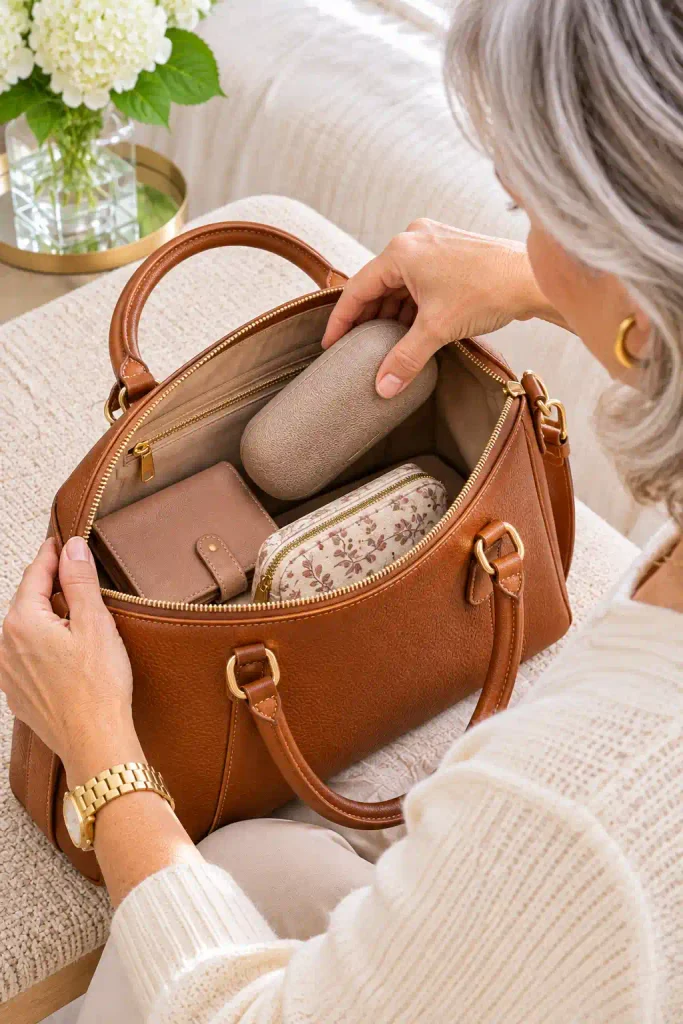
Start with your largest daily item, such as a glasses case or wallet. Place the other essentials around it, keeping your phone and keys near the top or in pockets. Use the same items in each candidate bag so the comparison is fair.
Leave enough room to move an item aside without emptying the bag. Keep anything fragile in its usual case during the test.
8# Adjust the Strap to Fit
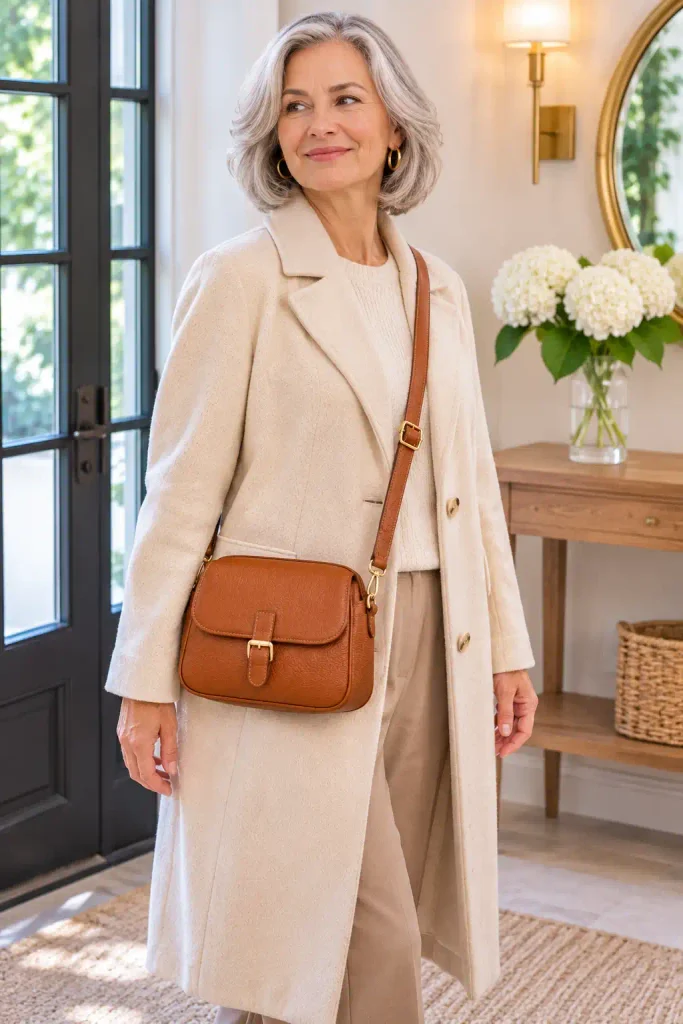
An adjustable strap lets you fine-tune where the bag sits. Move its buckle or slider in 1-inch increments, trying the fit after each change. For crossbody wear, start near the front of your hip. For shoulder wear, leave room beneath your arm. A fixed strap needs to fit as it is.
9# Walk With the Loaded Bag
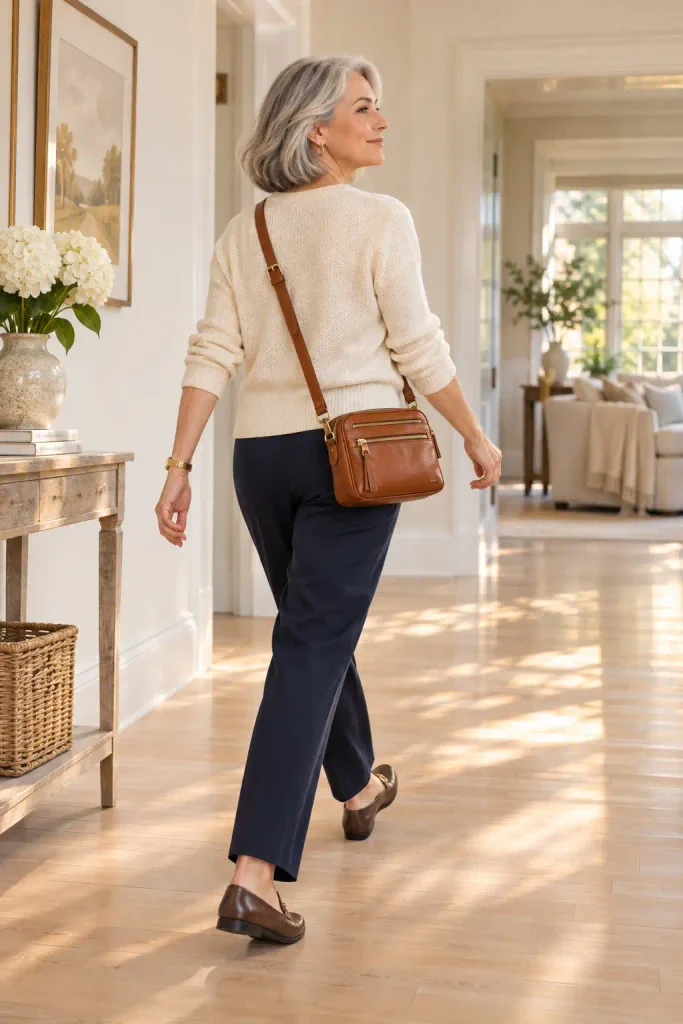
A 5-minute indoor walk gives you a first comfort check. Use your normal pace, turning corners and letting your arms move freely. Notice slipping straps, swinging, or pressure that makes you keep shifting the bag.
Stop if it hurts. Passing this short trial does not guarantee comfort all day.
10# Test Access to Your Essentials
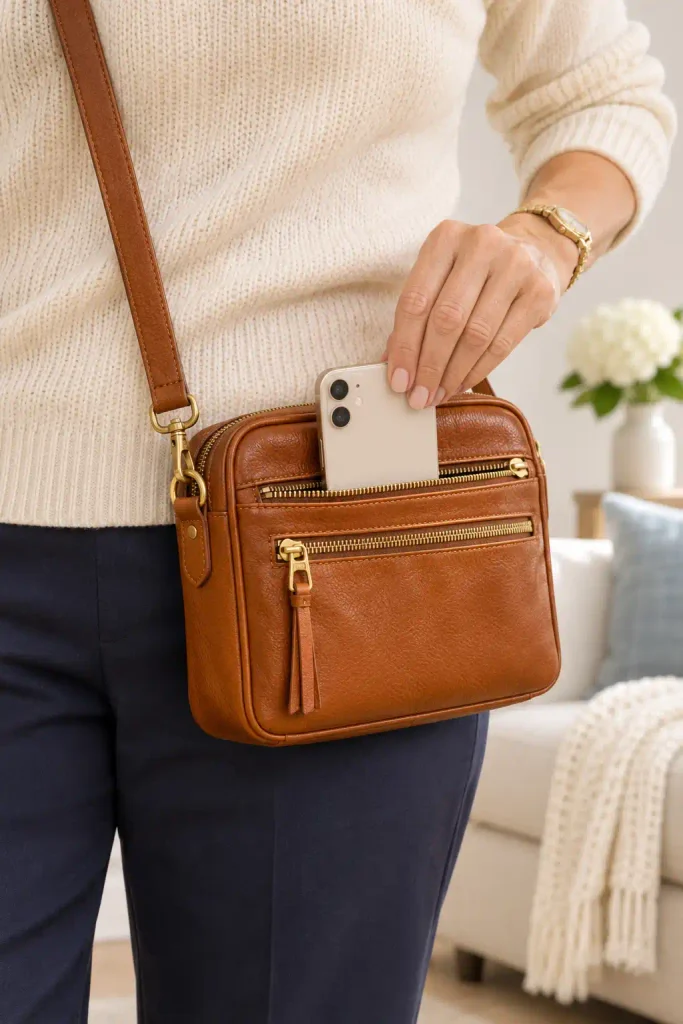
While wearing the packed bag, try three everyday moves: take out your phone; reach for your keys; remove your wallet. Return each item and close the bag before the next try.
Notice whether pockets snag or the fastening needs an awkward grip. Choose a layout you can use comfortably without unloading the main compartment.
Solve Common Fit Problems
| If This Happens | Try This |
|---|---|
| The shoulder strap keeps slipping. | Try a shorter setting over your usual clothes. If it still slips, compare a different strap shape or a crossbody option. |
| Your glasses case fits inside but catches at the opening. | Look for a wider opening. Extra space at the base will not solve a narrow entry. |
| The bag feels heavy once packed. | Remove items you do not need that day. If the essentials still feel too heavy, compare a bag with a lower empty weight. |
| Your phone disappears beneath other items. | Try a dedicated pocket that fits your phone with its case. Check that you can reach it while wearing the bag. |
| The strap feels tight over a coat. | Lengthen it and repeat the fit check. If it is already fully extended, choose a longer strap or another bag. |
Your Handbag Questions Answered
What size handbag should I choose?
Choose a size that holds your daily essentials with room to reach between them. Labels such as small or medium vary by brand, so check the opening and dimensions against your actual belongings.
Are crossbody bags a good choice after 50?
Crossbody bags for women over 50 are worth trying if you want your hands free. Check the loaded weight and strap fit; this style will not feel comfortable on everyone.
Should I choose leather or nylon?
I’d compare the actual bags for weight, finish, and upkeep. Choose the one whose look you enjoy and whose care instructions fit your routine; the material name alone cannot tell you how useful it will be.
Does an everyday handbag have to be neutral?
No. A brighter color can work well if you like it with several outfits you wear often. Use the three-outfit check before deciding.
How can I choose a handbag online?
Compare its dimensions, strap range, and empty weight with a bag you own. Look for photos of the opening and pockets, and confirm the return terms before ordering. Photos cannot settle comfort, so keep the choice provisional until you can try it.