If your clothes stopped feeling right somewhere around 50, I’d bet the clothes are the problem, not you.
I spent 26 years in fashion design, most of it in the parts of clothes nobody sees. Nearly every fit model I worked with was in her twenties, and brands build every size in a range from one base fit. So when your body changes, the clothes don’t change with it.
And your shape really does change, even when the scale says otherwise. Researchers in the long-running SWAN study found that once the menopause transition began, women gained fat twice as fast and started losing lean mass, while their weight kept rising at the same steady pace as before.
In plain terms, your shape can shift while your weight barely moves.
1. Measure the Body You Have Today

At 48, my clothes stopped making sense, so I did what any pattern maker would do. I measured myself properly. Almost every number had shifted, even though my weight had barely moved. Within a year, my fit notebook held 140 pages.
You don’t need 140 pages. You need four numbers, written down once a year, and the habit of checking them against each brand’s size chart instead of trusting the size on your old favorites. Labels change from brand to brand. Your measurements don’t.
Keep the tape snug but not tight, stand tall, and breathe out normally before you read the number.
2. Get Your Foundations Right First
Every top I ever drafted started from one spot, the bust point. Darts, princess seams, and the drape of the whole front all aim at it. When a bra lets your bust sit lower or wider than the pattern expects, all of those lines land in the wrong place.
That’s why a well-fitted bra fixes more outfits than any new blouse. Get measured by a professional fitter every year or two, since your size can change along with everything else. If the band feels loose but the cups fit, try the sister size, one band size down and one cup size up.
The mirror check for bra fit
3. Fit the Hardest Part, Then Tailor the Rest

Here’s the rule I’d hang on every fitting-room door: buy for the part of you that’s hardest to alter, then tailor everything else.
In tops, jackets, and dresses, that’s your shoulders and bust. Reshaping a shoulder means taking the sleeve apart, and it rarely comes back right. A waist, a hem, or a plain sleeve is quick work for a good tailor.
Letting things out is the other trap. I’ve argued with factories over a quarter inch of seam allowance more times than I’d like to admit, so I know how little spare fabric most ready-to-wear seams hold. A piece that’s too tight usually stays too tight.
Where your tailoring money goes furthest
✂️ Worth tailoring
Hemming pants and skirts
Taking in a waist
Shortening plain sleeves
⚠️ Rarely worth it
Reshaping shoulders
Letting out tight seams
Adding room at the bust
4. Give Every Piece the Sit-and-Reach Test
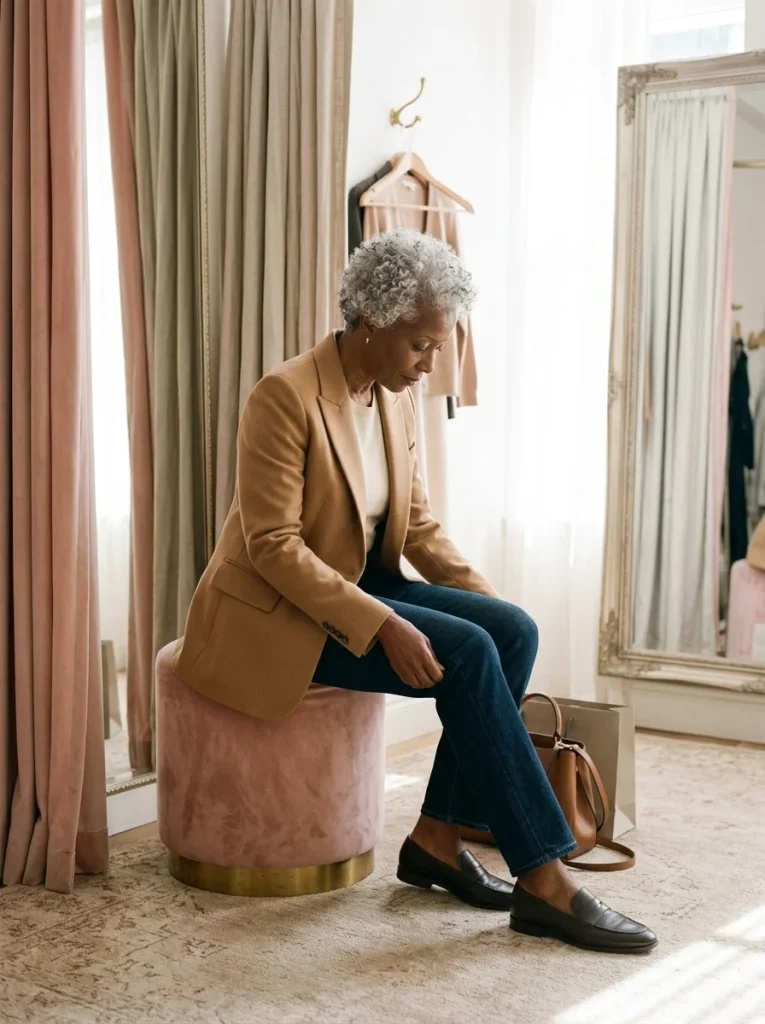
My wear test for anything I review includes a car ride and a sit-down meal, because that’s when a waistband tells the truth. A fitting room can’t give you either one, but this routine gets you close in about a minute.
The one-minute fitting-room routine
Sit. Stay down for a few breaths. Does the waistband dig in or the hem ride up?
Reach. Lean forward as if you’re grabbing your bag from the back seat. Watch for pulling across your back and shoulders.
Lift. Raise both arms to shoulder height. If the whole jacket rises with you, it’s tight across the back.
Turn. Stand sideways to the mirror and look for pull lines across the bust, hips, or back.
Pull lines are the clue most shoppers miss. When fabric wrinkles in a fan shape, the lines point straight at the spot that needs more room.
Lines aimed at the bust mean the bust needs space. Lines aimed at the hips mean the hips do. For dress checks like gaping buttons and waist seams, see my 14 Simple Outfit Ideas for Women Over 50 for an Elegant, Expensive Look.
5. Let Heavier Fabrics Do the Flattering
If there’s anyone who notices how a thin tee clings while a heavier knit just skims? The difference is weight. Heavier fabric has enough body to hang from your shoulders instead of following every curve underneath.
Hold any piece up to a window before you buy it. If you can clearly see your hand through it, it will cling, and it will probably show your bra.
Read labels closely, too. “Vegan leather” can mean a polyurethane coating, PVC, or a newer plant-based material, and each one wears differently over time. Same name, very different jacket.
Easy fabric swaps
6. Retest Your Colors When Your Hair Goes Gray
When my hair went silver at 49, half my favorite shades stopped working. I’ve tested what replaced them ever since, and I always do it the same way: beside a north-facing window. That light stays soft and steady all day, though any window out of direct sun will work.
Hold two colors under your chin, one at a time, and look at your skin, not the fabric. The right shade makes you look rested. The wrong one makes you look tired, no matter how much you love it on the hanger. Bring a friend if you can, because other people often see the difference faster than we do.
What to watch for in the mirror
Shadows under your eyes look deeper. Your skin looks gray or blotchy. You notice the color before your face.
Your skin looks even and rested. Your eyes look brighter. You notice your face first.
7. Size Your Shoes All Over Again
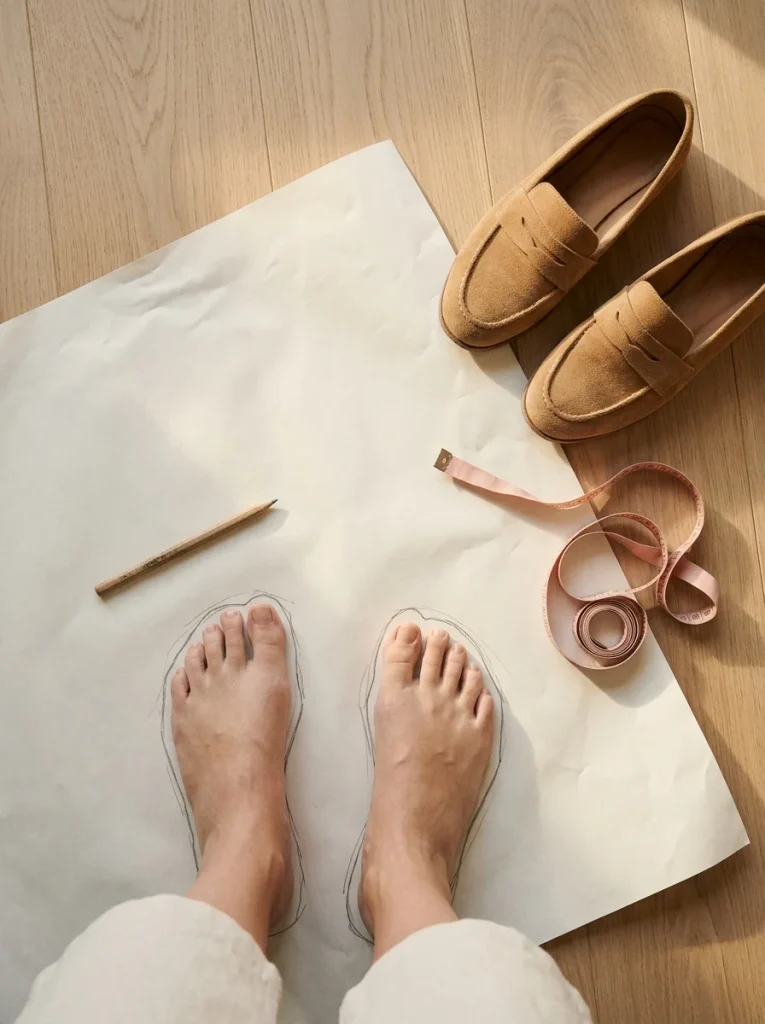
Your feet change too, and most of us never think to measure them again. According to the American Orthopaedic Foot & Ankle Society, feet tend to get longer and wider with age as the arches settle, and it isn’t unusual for shoe size to grow by as much as two sizes since early adulthood.
I wear every pair of shoes I write about for at least a full week before I say a word. My feet have opinions, and so do yours. Polished shoes only look polished if you can walk in them.
Foot specialists keep the shopping advice simple: get both feet measured at the end of the day while you’re standing, then buy for the larger foot. Here’s why each step matters.
How foot specialists say to shop
8. Build Your Wardrobe Around Your Real Week
Grab a pen and write down what you actually did each day last week. Be honest, and include the boring parts.
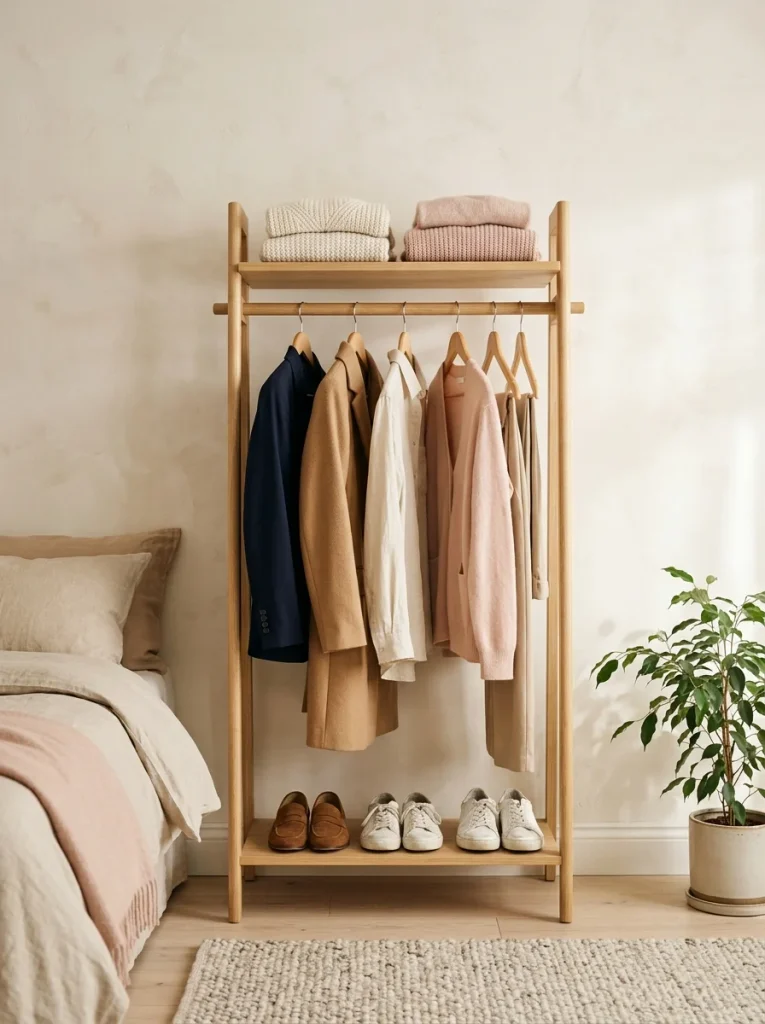
Most closets are built for the rare big occasion, and ordinary days get whatever’s left. I’d flip that. A small, deliberate wardrobe built around how you really spend your week gets worn, and clothes that get worn earn their place. It’s the smart part of a capsule wardrobe without the strict rules.
Find your most common day and shop for it first. For a lot of women, that means errands, lunches, and walks. On those days, great jeans, easy knits, and a jacket you love are worth more than another occasion dress.
An example week
Six everyday days and one dressy one. Shop for the six first.
9. Make Good Clothes Last Longer

Before I recommend anything, I wash it at least three times, exactly as the care label says. Heat is usually the biggest enemy. Dryers shrink cotton, fade color, and wear out the stretch fibers that help jeans keep their shape.
And fold your sweaters. Hangers slowly stretch the shoulders out of shape.
Care cheat sheet
Always start with the care label.
Start With One Tip This Week
You don’t need a new closet to change how you look every day. You need clothes that fit the body, the hair, and the feet you have right now.
Start small. Take your four measurements this week. Then pull out the one piece you love but never wear, and figure out why.
More often than not, it’s the fit. When you’re ready to put everything together, my 15 Best Outfits for Women Over 50 for a Stylish and Confident Look shows these ideas in real outfits.
Have a fit question I didn’t answer? Email me at contact@lookimpress.com. I answer more messages than you’d think.
FAQ’s
How can I update my style without buying a whole new wardrobe?
Start with what you already own. Take the pieces you love but rarely wear to a tailor, get a proper bra fitting, and sort your closet by the days you actually live. Then add one new piece at a time, beginning with whatever your most common day needs. Small fixes show up every single day, which is why they change your style faster than a shopping spree.
What colors look best with gray or silver hair?
There’s no single list, which is why I test instead of guessing. Your skin and eyes decide, not just your hair. Some women find their old golden shades suddenly fight with silver, while others find those same shades glow. Hold each color under your chin in soft daylight and watch your face. The mirror will tell you which group you’re in.
How often should I measure my body and feet?
I’d measure your body once a year, and any time your clothes start fitting differently. Have your feet measured whenever you shop for shoes, especially if it’s been a few years. Write every number down with the date. Over time you’ll see your own patterns, and online shopping gets much easier.
What’s the most common fit mistake women over 50 make?
In my experience, it’s dressing from memory. I did it myself for a while. My weight had barely changed, so I assumed my shape hadn’t either, and it had. The fix is simple, if a little humbling: measure yourself, compare the numbers to the size chart, and let the fit make the decision instead of the label.
1 thought on “9 Fashion Tips for Women Over 50 That Can Transform Your Everyday Style”